Key Takeaway
See the stages in a garage conversion, from feasibility and drawings to approvals and construction, with no promise of a fixed overall timescale.
The Realistic Garage Conversion Timeline
A garage conversion involves several separate stages, from checking feasibility and preparing drawings to approvals, contractor selection and construction.
Have a project in mind? Start with a few details about your home.
Check your garage conversion plansStage 1: Complimentary Consultation and Feasibility
The process starts with a conversation about what you want to achieve. We assess the feasibility of your garage conversion — the floor level relative to the house, drainage options, structural implications of removing the garage door, insulation strategy, and whether planning permission is required.
For most integral and attached garages, planning permission is not needed. The change of use to habitable space typically falls within Permitted Development rights, with a few exceptions (conservation areas, Article 4 Direction areas, some new-build estates where a planning condition requires the garage to remain as parking). We confirm your position at this stage.
Stage 2: Design and Drawing Preparation
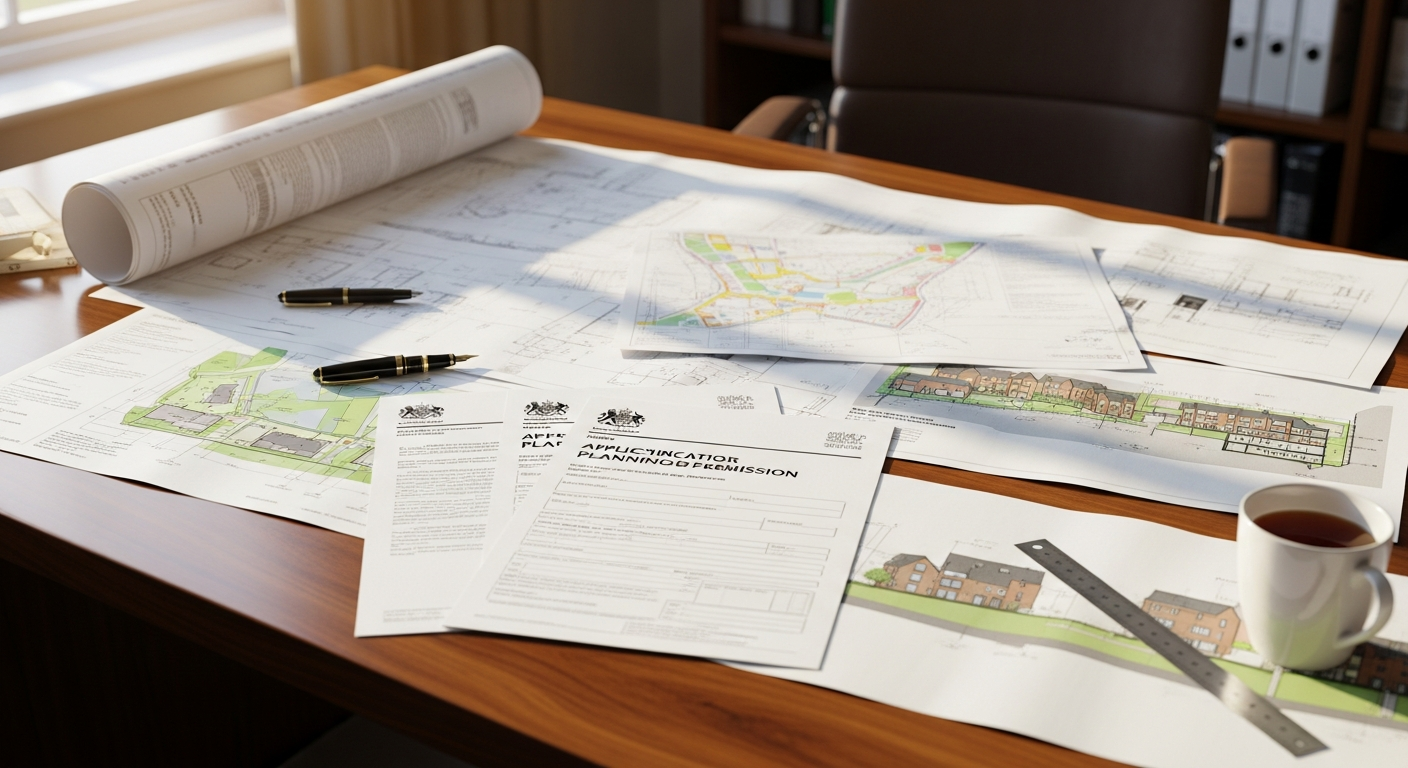
After instruction and deposit, we visit the property to take accurate measurements. Your measured survey is booked within 10 working days of your deposit. Your first drawings follow within 15 working days of the survey. For a garage conversion, the drawing package typically includes:
- Existing and proposed floor plans showing the garage layout, new internal arrangement, window and door positions
- Elevations showing the new front elevation with the garage door replaced by a window and new facing materials
- Construction cross-sections through the walls, floor and ceiling showing the full thermal envelope — wall insulation build-up, floor construction (usually a new insulated concrete slab or insulated overlay), roof or ceiling insulation
- Structural details for the new lintel or opening into the house if the internal door is being widened
- Block plan for the Building Notice submission
Your survey and drawing schedule will be agreed with you after instruction.
Stage 3: Building Regulations Submission
The Building Notice is submitted to your local council's Building Control team. For a Building Notice (the simpler route), there is no formal wait for approval — the notice takes effect immediately and an inspector visits during construction. You can start on site as soon as the notice is submitted, provided all the technical design work is done.
If you opt for a Full Plans Application, the council checks and approves the drawings before work begins. This route is worth considering if your conversion involves complex structural work or drainage connections to a public sewer; ask the council about its current determination service.
Ready to apply these ideas to your own home?
Explore your garage optionsStage 4: Finding a Contractor
While drawings are being prepared, you should be getting quotes from contractors. A garage conversion is smaller than a full extension but still requires a builder with experience in conversion work — particularly insulation installation and damp-proofing, which are areas where cutting corners leads to problems. Our Premium Package includes contractor tender management, sending your drawings to vetted firms and producing a comparison report.
Compare written contractor quotes against the agreed drawing scope and confirm the work sequence directly with your chosen contractor.
Stage 5: Construction
The construction stage may include:
- Strip out: Remove the garage door, existing finishes and any storage
- Structural work: Fit a new lintel over the former garage door opening and a new window frame
- Floor: Install an insulated concrete slab or raised timber floor with insulation
- Walls and ceiling: Add internal wall insulation, plasterboard and skim
- First fix: Complete electrics and any plumbing for a bathroom
- Second fix and finishes: Fit skirting, doors and decoration
Building control will make 2–3 site visits during construction to inspect foundations, structure, insulation and electrical work.
Stage 6: Completion and Building Control Sign-Off
Once construction is complete, the building control inspector makes a final visit and issues a Completion Certificate. This document is proof that the works comply with Building Regulations — your solicitor will ask for it when you come to sell. Keep it safe.
Total Timeline: 3 to 5 Months
Book a complimentary consultation to discuss your project and get a fixed fee for the defined design work.
A useful next step for your home
Share a few project details to explore an initial budget and planning view.