Key Takeaway
Choosing between a flat roof and a pitched roof for your extension isn't just an aesthetic decision — it affects planning permission, build cost, maintenance, and how much natural light you can bring in. Here's everything you need to know.
The Roof Decision That Shapes Your Whole Extension
When homeowners begin thinking about a rear extension, the conversation often starts with floorplan — how many square metres, will the kitchen be open plan, where will the doors go. But one of the most consequential decisions is the one that goes on top: flat roof or pitched roof?
Have a project in mind? Start with a few details about your home.
Build an initial project budgetBoth are valid, popular choices for Hampshire extensions, and both have genuine advantages. The right answer depends on your property type, your budget, your planning context, and how you want to use the space. Here's a clear-headed comparison.
Flat Roof Extensions
What We Mean by "Flat Roof"
A flat roof extension isn't truly flat — it has a slight fall (typically 1:80) to direct rainwater to the drainage outlet. Modern flat roof extensions almost always use either a GRP (fibreglass) single-ply membrane or a EPDM rubber membrane as the waterproofing layer. Both, when correctly installed, offer excellent longevity and weather resistance.
The construction method matters too. The gold standard today is a warm flat roof: insulation sits above the structural deck, keeping it warm and protected, and the whole assembly achieves the U-values required by Building Regulations. Cold flat roofs (where insulation sits below the deck in a ventilated space) are less commonly used in new extensions because they require careful ventilation detailing to avoid condensation.
Advantages of a Flat Roof Extension
- Lower build cost: A flat roof extension typically costs 15–25% less to build than an equivalent pitched roof, because there's less material and simpler carpentry involved.
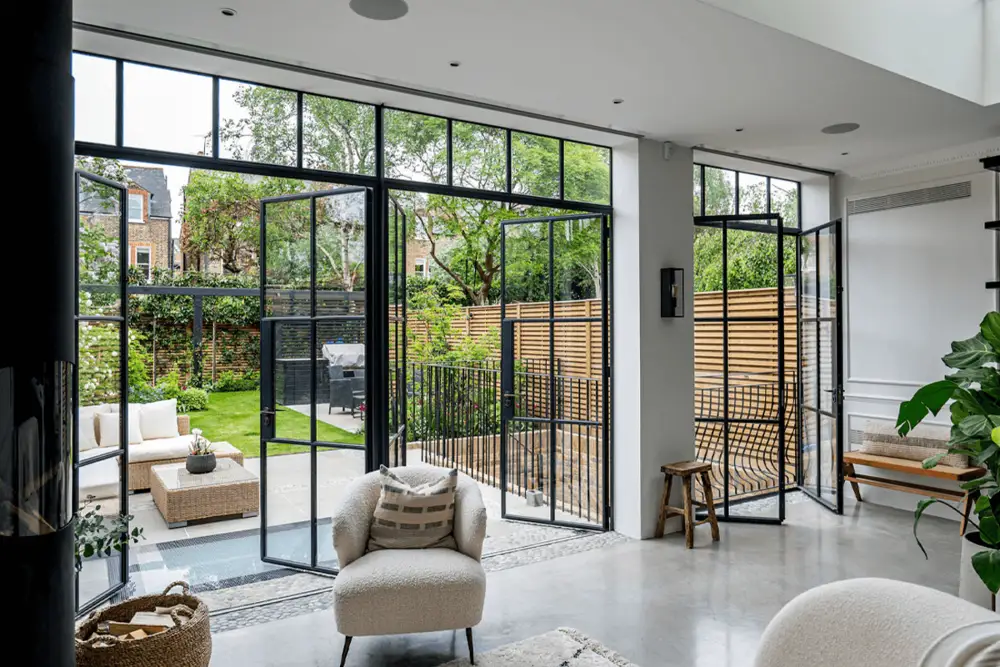
- Rooflight potential: Flat roofs can accommodate large rooflights and roof lanterns that flood the interior with natural light — one of the most popular features in contemporary rear extensions.
- Maximises ceiling height: Because there's no roof pitch eating into the internal volume, a flat roof extension can achieve full ceiling height right to the rear wall, making relatively modest floor areas feel spacious.
- Faster to build: The simpler structure typically means a shorter build programme.
- Contemporary aesthetic: Flat roofs suit modern, minimalist extension designs and pair beautifully with large areas of glazing.
Disadvantages of a Flat Roof Extension
- Perceived maintenance: Flat roofs have historically been associated with leaks, though modern GRP and EPDM systems are highly reliable when installed by competent contractors. Poor installation rather than the roof type itself is usually to blame for problems.
- Planning sensitivity: In conservation areas and for listed buildings, local authorities often prefer a pitched roof that better reflects the existing character of the property. A flat roof rear extension may be more contentious to approve in sensitive locations.
- Lifespan perceptions: Some mortgage lenders and insurers treat flat roofs differently, though this is less of an issue with modern single-ply systems that carry 20–25 year guarantees.
Pitched Roof Extensions
The Case for Pitching Your Roof
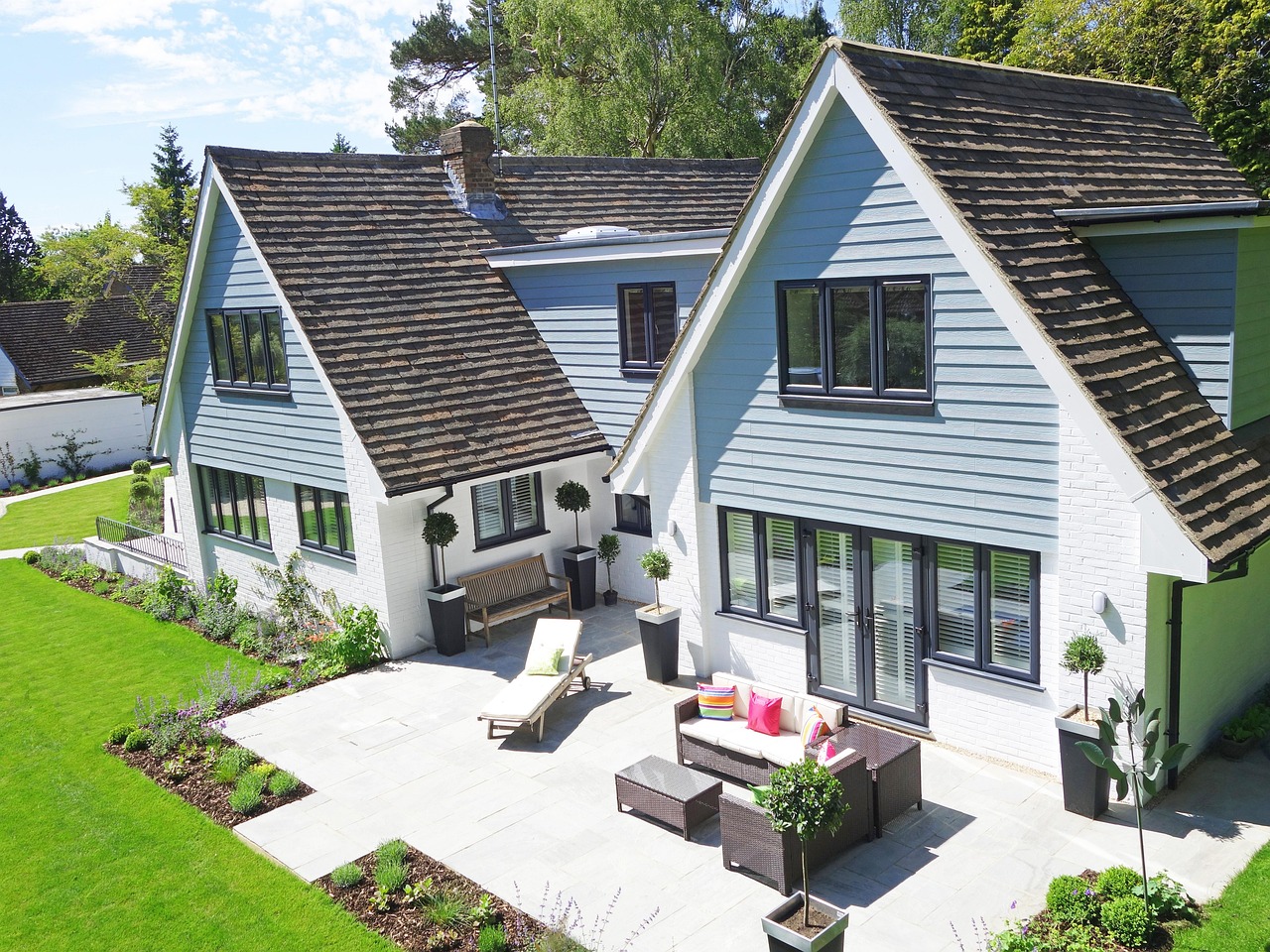
A pitched roof extension connects more naturally to the existing house in most cases, and for good reason — the majority of Hampshire homes, from Victorian terraces to 1930s semis and modern estates, have pitched roofs. An extension that continues the pitch creates visual unity and often helps with planning permission.
Advantages of a Pitched Roof Extension
- Planning-friendly: Planners and conservation officers generally look more favourably on extensions that mirror the existing roof form. If your area has a design guide requiring "traditional materials and forms," a pitched roof extension is usually the safer choice.
- Property character: A well-designed pitched roof extension that matches the host property in pitch angle and tile specification can be almost indistinguishable from the original building — a mark of quality design.
- Longevity: A correctly constructed pitched roof with quality tiles or slates will last 50+ years with minimal maintenance, typically outperforming a flat roof membrane system.
- Resale value: While there's no definitive data, many estate agents suggest pitched roof extensions are slightly more attractive to cautious buyers who worry about flat roof maintenance.
Disadvantages of a Pitched Roof Extension
- Higher build cost: More complex carpentry, additional materials, and longer build time all contribute to higher costs compared to an equivalent flat roof extension.
- Height restrictions: A pitched roof extension that meets a two-storey wall needs careful design to avoid excessive height — this can limit the internal volume of a single-storey extension in some configurations.
- Light limitations: While Velux-style rooflights are possible in a pitched roof, they're less impactful than the large roof lanterns available on flat roof extensions.
Hybrid Solutions: The Best of Both
The good news is that you're not always forced to choose. Many of our best-received Hampshire extensions combine elements of both: a pitched roof that matches the existing house at the ridge, transitioning to a flat-roofed section with a large roof lantern where maximum light is needed. These "split-level" roof designs are more complex to detail and build, but the results can be exceptional.
Ready to apply these ideas to your own home?
Check your project costsAnother popular option is a mono-pitch (lean-to) roof: a single pitched plane that slopes away from the house. Mono-pitch extensions are simpler and cheaper than a full hipped or gabled roof, while still having the planning advantages of a pitched form.
Which Should You Choose?
Our general advice for Hampshire homeowners:
- Choose flat roof if you want maximum ceiling height, large rooflights, a contemporary aesthetic, and your planning context is flexible.
- Choose pitched roof if you're in a conservation area, your home has a strong traditional character, or your neighbours have extensions with pitched roofs that set a visual precedent.
- Consider a hybrid if you want the planning benefits of a pitched front section with the light-gathering potential of a flat section to the rear.
At Hampshire Build, we'll advise you on the most appropriate approach for your specific property and planning context during your complimentary consultation — before you commit to anything.
A useful next step for your home
Share a few project details to explore an initial budget and planning view.